

Across England, nutrient pollution has become a critical issue – not only for the health of our rivers, but also for the delivery of much-needed housing. While much of the focus has traditionally been placed on agriculture and wastewater treatment works, increasing attention is now being given to a less visible, yet highly significant source of pollution – ageing and inefficient septic tanks, writes Zak Simmonds of the National Rivers Consortium (NRC).
As a specialist organisation dedicated to delivering practical, large-scale nutrient mitigation solutions, we can see that many older septic tank systems are quietly contributing to nutrient loading in some of the country’s most sensitive catchments. This has direct consequences for water quality and increasingly, has affected the ability of local authorities to grant planning consent.
Working in partnership with local authorities, landowners and developers, the NRC identifies, implements and manages schemes that generate verified nutrient credits through real, measurable reductions in pollution. At the heart of this approach is a simple principle – if we are serious about restoring river health and enabling sustainable growth, we must tackle pollution at its source. Septic Tank Upgrades (STUs) are not just part of that solution – they are rapidly becoming one of the most effective and scalable tools available within the nutrient neutrality framework.
Nutrient pollution, primarily from phosphorus and nitrogen, is a major cause of ecological decline in UK rivers. These nutrients fuel algal blooms, reduce oxygen levels and damage biodiversity. According to the Environment Agency, only around 45% of rivers in England achieve “good status” for phosphorus, highlighting the scale of the issue.
While agriculture and wastewater treatment plants are often cited as the main contributors, private wastewater systems, particularly older septic tanks, also play a significant role. Many of these systems discharge partially treated or untreated effluent directly into the ground or nearby watercourses, allowing nutrients to enter sensitive catchments.
The issue is compounded by the fact that thousands of these systems are ageing, poorly maintained or no longer fit for purpose. In nutrient-sensitive areas, their cumulative impact is substantial.
Why septic tank upgrades matter
Septic Tank Upgrades address this problem directly. Rather than attempting to offset pollution elsewhere, they remove it at source by replacing outdated systems with modern, high-performance package treatment plants.
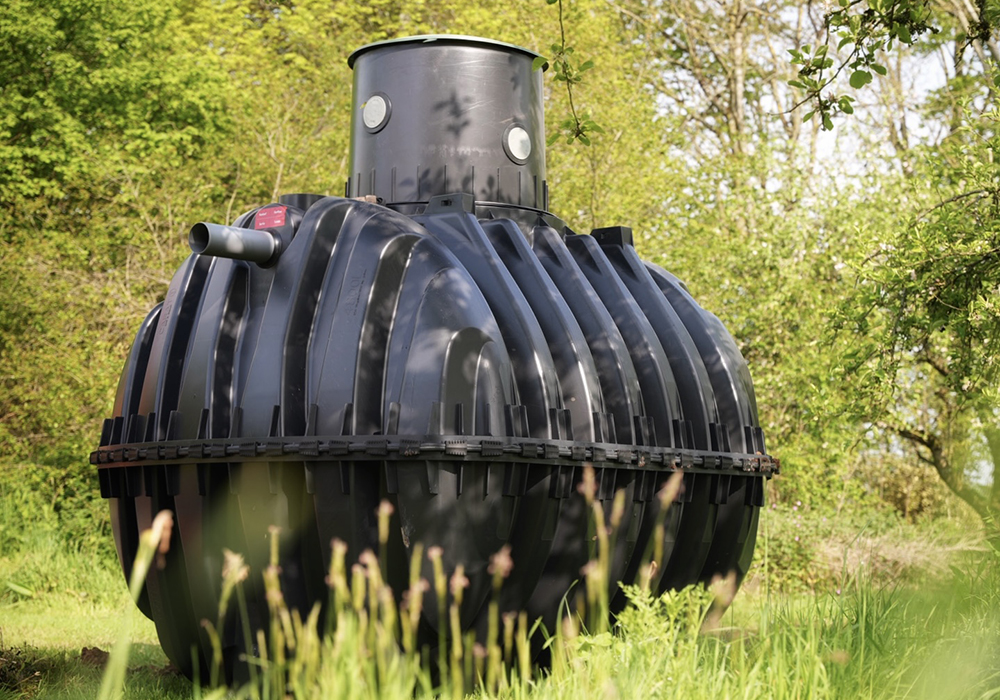
These systems are designed to significantly reduce the levels of phosphorus and nitrogen released into the environment. In many cases, they transform a polluting asset into a net environmental benefit.
As industry guidance confirms, upgrading inefficient septic systems can remove harmful nutrients, protect rivers and ensure compliance with increasingly stringent environmental regulations.
For the NRC, this principle is crucial. By identifying properties with underperforming septic tanks and upgrading them to modern treatment systems, they are able to deliver measurable and verifiable reductions in nutrient pollution.
What makes STUs particularly powerful is their ability to generate nutrient credits, a critical mechanism within the nutrient neutrality framework. Under nutrient neutrality rules, new developments must demonstrate that they will not increase nutrient loads in affected catchments. This has led to significant delays in housing delivery, with tens of thousands of homes held up across England.
Septic Tank Upgrades offer a practical and scalable solution. Each upgrade produces a quantifiable reduction in phosphorus and nitrogen, which can be converted into nutrient credits. These credits can then be used by developers to offset the impact of new homes.
As demonstrated by NRC-led schemes, replacing inefficient septic tanks with modern treatment plants generates measurable nutrient reductions that can be directly applied to unlock planning permissions. This is a fundamentally different approach. Instead of relying on theoretical offsets or long-term land use change, STUs deliver immediate, real-world improvements in water quality.
A proven and scalable approach
One of the key advantages of Septic Tank Upgrades is their scalability. Across England, there are thousands of properties still reliant on outdated private wastewater systems. Each represents an opportunity to reduce pollution and generate environmental benefit.
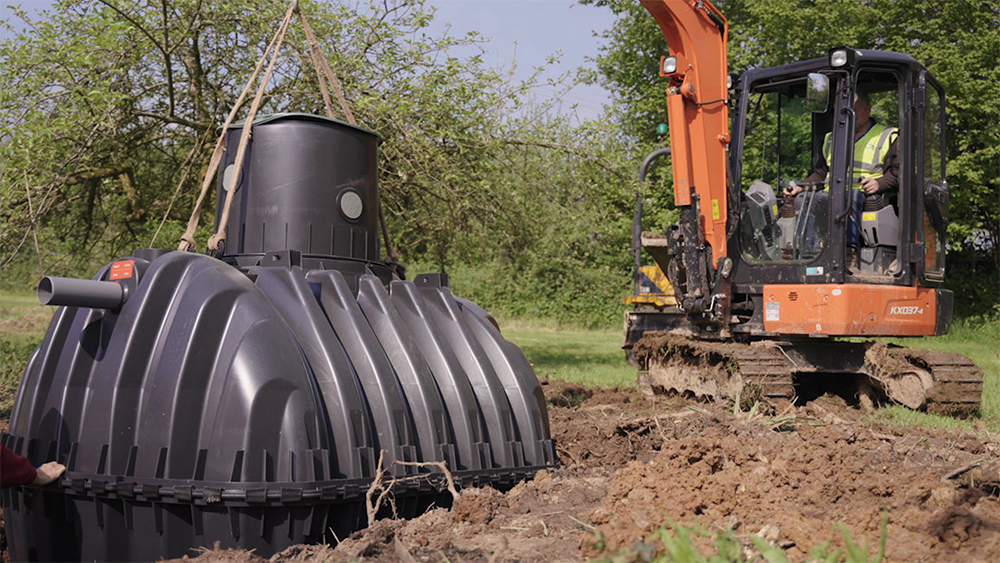
The NRC model is designed to harness this potential. Working with homeowners, councils and developers, the company can manage the entire upgrade process, from identifying suitable sites and engaging property owners, through to installation, monitoring and long-term maintenance.
This approach is already delivering results. In catchments such as Norfolk and Kent, STUs are helping to unlock previously stalled developments while simultaneously improving river health.
Importantly, these upgrades are delivered at no cost to homeowners, funded through the sale of nutrient credits to developers. This creates a genuinely circular model, where environmental improvement and economic growth are aligned.
This is because there is a growing recognition that tackling pollution at source is far more effective than attempting to mitigate it later. Traditional approaches to nutrient neutrality have often focused on large-scale interventions such as wetland creation or land use change. While valuable, these solutions can be slow to deliver, complex to manage and difficult to scale.
Septic Tank Upgrades offer a more direct route. By addressing the problem where it originates, they deliver immediate and measurable reductions in nutrient loading. This is particularly important in sensitive catchments, where even small increases in nutrient levels can have significant ecological impacts. By removing pollution before it enters the system, STUs help to stabilise and improve water quality more effectively.
One of the most compelling aspects of STUs is their ability to balance two seemingly competing priorities – environmental protection and housing delivery. Nutrient neutrality has created a major bottleneck in the planning system, with thousands of homes delayed due to concerns over water quality. At the same time, there is an urgent need to protect and restore our rivers.
Septic Tank Upgrades provide a solution that addresses both challenges. By generating verified nutrient credits, they enable development to proceed without adding pressure to already stressed ecosystems.
This dual benefit is at the heart of the NRC approach. As recognised across the sector, septic tank upgrades supported by high-efficiency treatment systems have proven to be one of the most effective ways of delivering nutrient neutrality mitigation.
A key part of the nutrient neutrality offer
As the industry continues to grapple with nutrient neutrality, it is becoming clear that no single solution will be sufficient. A combination of approaches will be required, tailored to the specific characteristics of each catchment.
However, Septic Tank Upgrades are increasingly recognised as one of the most practical, cost-effective and scalable tools available.
They deliver:
- Immediate reductions in nutrient pollution
- Measurable and verifiable outcomes
- A clear audit trail for planning authorities
- A direct link between mitigation and development
- Long-term environmental benefit through ongoing monitoring
In short, they provide certainty – something that has often been lacking in nutrient neutrality solutions. This is because the challenge of nutrient neutrality is not going away. If anything, it is likely to become more prominent as environmental standards tighten and pressure on water resources increases. In this context, the need for practical, deliverable solutions has never been greater.
Septic Tank Upgrades represent exactly that. They are not theoretical. They are not speculative. They are a proven, working solution that tackles pollution at source, supports housing delivery and contributes to the long-term recovery of our rivers.
At the National Rivers Consortium, we see STUs as a key part of the future of nutrient mitigation. By scaling this approach across affected catchments, we can unlock development, protect our environment and demonstrate that sustainable growth is not only possible – it is achievable today. Whether you’re a developer facing nutrient neutrality delays, a local authority looking for verified mitigation, or a homeowner with an ageing septic tank, the National Rivers Consortium can help. Our Septic Tank Upgrade programme delivers measurable nutrient reductions, credits you can rely on, and real improvements to river health — at no cost to homeowners.