

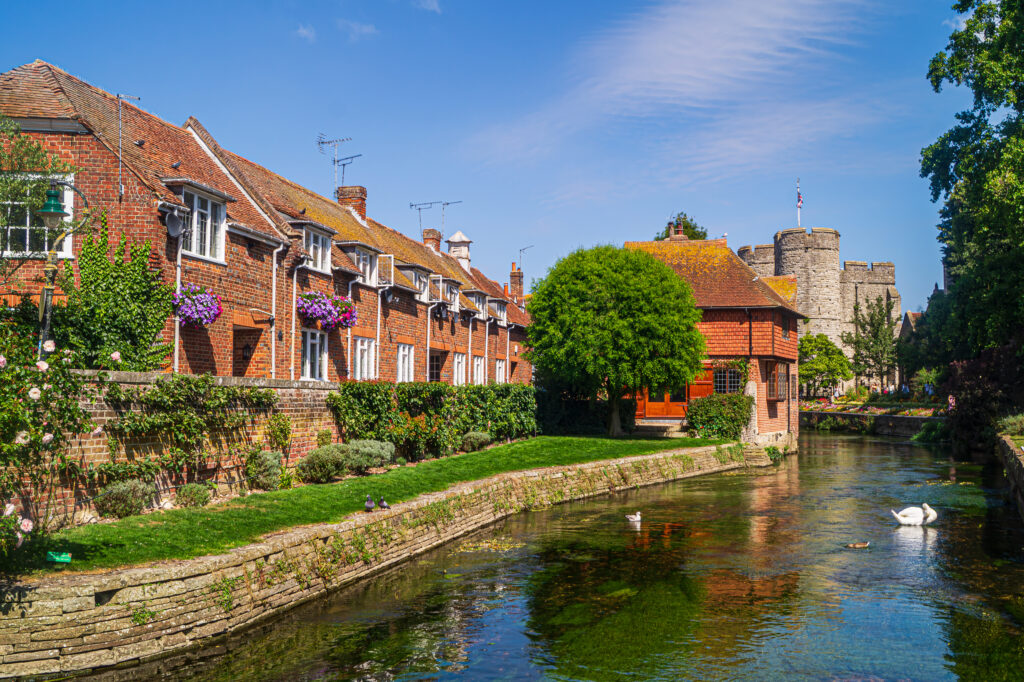
The Great Stour rises near Lenham, on the North Downs escarpment, close to where the East Stour begins its own short course near Postling. The two join at Ashford and flow on as a single river, cutting north-east through the chalk of the Downs past Wye, Chilham and Chartham before reaching Canterbury, where the water splits into two channels around the cathedral city. Below Canterbury the Little Stour joins at Plucks Gutter and the Sarre Penn at Stourmouth, and the river reaches its old tidal limit at Fordwich, once a working port and often called England’s smallest town, before opening out into the wide, shallow wetland at Stodmarsh and continuing to the sea at Pegwell Bay, near Sandwich. It is Kent’s second-longest river and its second-largest catchment, and for centuries it carried trade between Canterbury and the Continent.
What makes Stodmarsh internationally important
Stodmarsh, on the Stour just north-east of Canterbury, is one of the most heavily protected wetlands in England. It is a National Nature Reserve and a Site of Special Scientific Interest across 623 hectares, and it carries a Special Protection Area, a Special Area of Conservation and Ramsar designation on top. When the government’s Nature Conservation Review assessed it, Stodmarsh was ranked a Grade 1 site of national importance and identified as the largest reedbed in southern England.
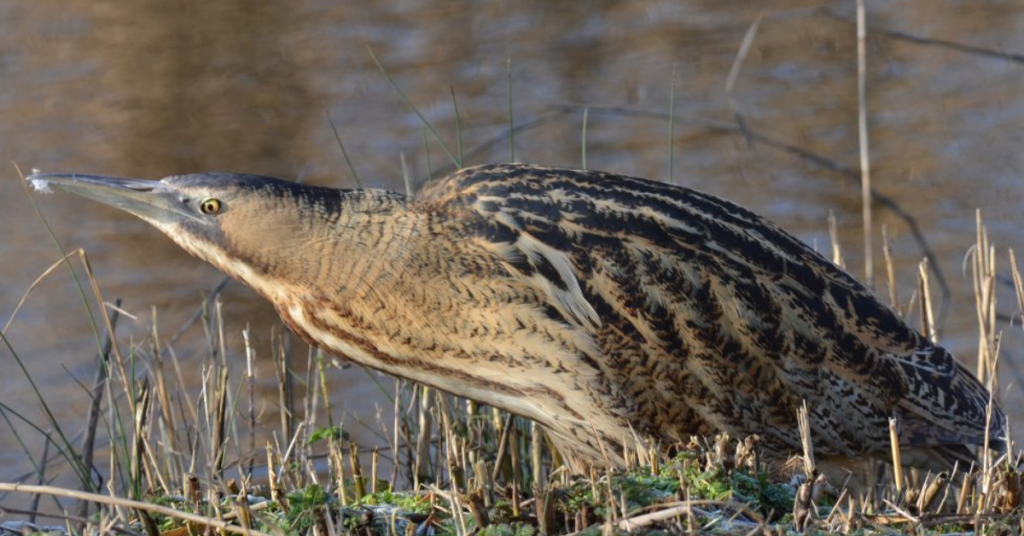
That reedbed is why bitterns still boom here, one of Britain’s rarest breeding birds, alongside bearded tits, marsh harriers and, in winter, hen harriers. The ditches and open water hold otters and water voles, one of Britain’s most threatened mammals, plus a nationally rare pondweed and the shining ramshorn snail. One species is found nowhere else in Britain at all: a small micromoth called the Kentish neb, known only from Stodmarsh.
A wetland made by coal, not by hand
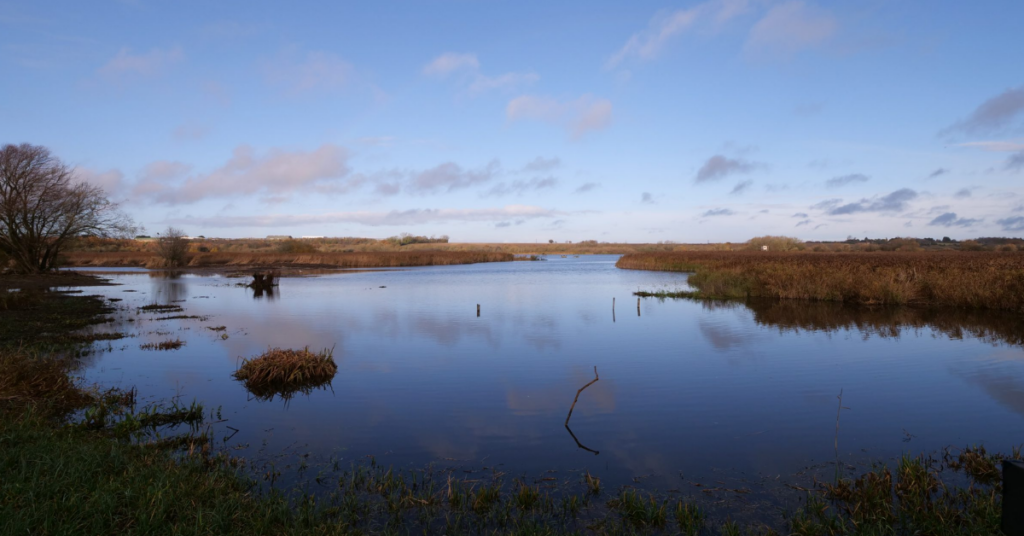
Unlike the Broads, Stodmarsh was not dug. For centuries the valley was flood meadow, grazed by cattle and horses on the flat ground either side of the river. What changed it was coal. Chislet Colliery, sunk nearby in the early twentieth century, caused the ground to subside, and by the 1930s the sunken land had flooded into shallow lakes. Grazing eased off, the water spread, and birds moved in. Natural England and its predecessor bodies later restored and extended the wetland deliberately around Grove Ferry, turning old gravel workings and subsided ground into the reedbed and lakes that exist today.
That history left Stodmarsh with exactly the kind of shallow, enclosed water that reacts fast to whatever reaches it, in much the same way the Broads do, even though the two wetlands were made by entirely different processes a hundred miles apart. That shallowness is not just scenery. It is the reason Stodmarsh has become one of the sharpest examples in England of what happens when a protected wetland receives too much nitrogen and phosphorus.
What too much nitrogen and phosphorus does to Stodmarsh’s lakes
Natural England has found sound evidence that two of the lakes at Stodmarsh have been enriched by nitrogen and phosphorus since 2020, largely through wastewater discharge in the catchment. Its assessments record the eutrophication that follows: algal blooms that cloud the water and starve it of oxygen, and fish kill events in the affected lakes. A 2016 Natural England study of the site’s hydrology found wastewater treatment works responsible for the majority of the phosphorus reaching the river. Stodmarsh is designated for both nutrients, not phosphorus alone, because Natural England’s advice treats nitrogen as driving the same decline here that phosphorus does, and an old or failing septic tank discharges both.
What Nutrient Neutrality means for building in the catchment
Natural England began advising on Stodmarsh from June 2019, telling planning authorities that new housing, tourist and mixed-use development in the catchment was likely to add to the problem, and it issued formal nutrient neutrality advice and a calculation methodology in July 2020. At that point Stodmarsh was one of only a handful of catchments in England under this kind of advice, alongside the Solent, Poole Harbour and a few others. It was not until March 2022 that Natural England expanded the rules nationally, adding the Broads and around twenty other catchments in a single letter. So by the time most of England came under nutrient neutrality, Stodmarsh had already been living with it for the best part of two years. Six authorities are affected: Ashford, Canterbury, Dover, Folkestone and Hythe, Maidstone and Swale. Alongside that advice, the Environment Agency ran an investigation under its Water Industry National Environment Programme into how much of the nutrient load was coming from wastewater treatment works discharging into the Stour, reporting in 2022.
In practice, that means any new development connecting to a wastewater system in the catchment has to demonstrate nutrient neutrality before it can proceed, in the same way as in the Broads and dozens of other protected catchments across England.
What NRC does in the Stour catchment
Kent is our second home catchment after Norfolk, and our regional office is based in Maidstone. We work here through Stour Environmental Credits Ltd, a joint venture owned by Ashford Borough Council and Canterbury City Council, which appointed NRC as its mitigation contractor after a full procurement process.
The model is the one we run in Norfolk. We find homes on old or failing septic tanks across the catchment and replace them, free of charge, with Graf One2Clean treatment plants built and calibrated at our factory. Stour Environmental Credits announced the first installations at Charing Heath and Bilting in November 2025, with hundreds more planned across the catchment. Each plant is monitored once it is in the ground, so the nutrient reduction it delivers is measured and verified, then sold to developers as credits.
Stour Environmental Credits confirmed that credits went on sale in June 2026. If you are building in the Stour catchment and your scheme carries a nutrient requirement, credits are available now.